“I truly wish I had gotten into it when I was younger, but it felt like such a big leap that I wasn’t ready to take at the time. Now that I am in it, I realize that it wasn’t such a big leap at all.”
Q: What were your younger years like?
A: I was born in England and moved to Canada when I was 10. I grew up in an entrepreneurial family. My mom and dad were always trying new businesses from full-size kit cars to online t-shirt designing. This is probably where I got my business mind. I ended up going the college route into a steady job but always yearned to do something else. It wasn’t until my kids were old enough and didn’t need me or my time as much that I finally ventured into network marketing and acting. It’s funny because both of these careers have really served each other!
Q: What are you passionate about?
A: [Because of] acting and learning, I am way more comfortable presenting myself online and doing videos. My network marketing business has given me an income stream when I am in between acting jobs. Currently, I have several streams of income online. I have one direct sales company that I have been with since September of 2019. I am with this company because I absolutely love the product, so it made sense to me to sell it. I also am an affiliate for several other companies.
My main focus for my business development and growth right now would be Pinterest and YouTube. I do like Facebook and Instagram, but feel there are too many restrictions in place, and Pinterest is growing so fast that I think everyone should be there! I am very seriously thinking of putting a course together to help other entrepreneurs understand how to use Pinterest for their business!
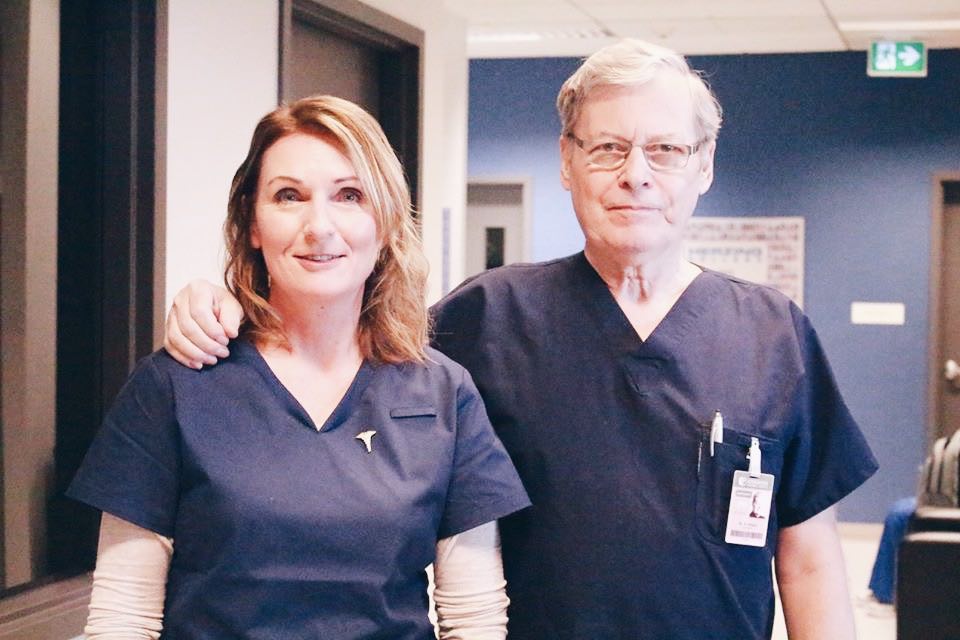
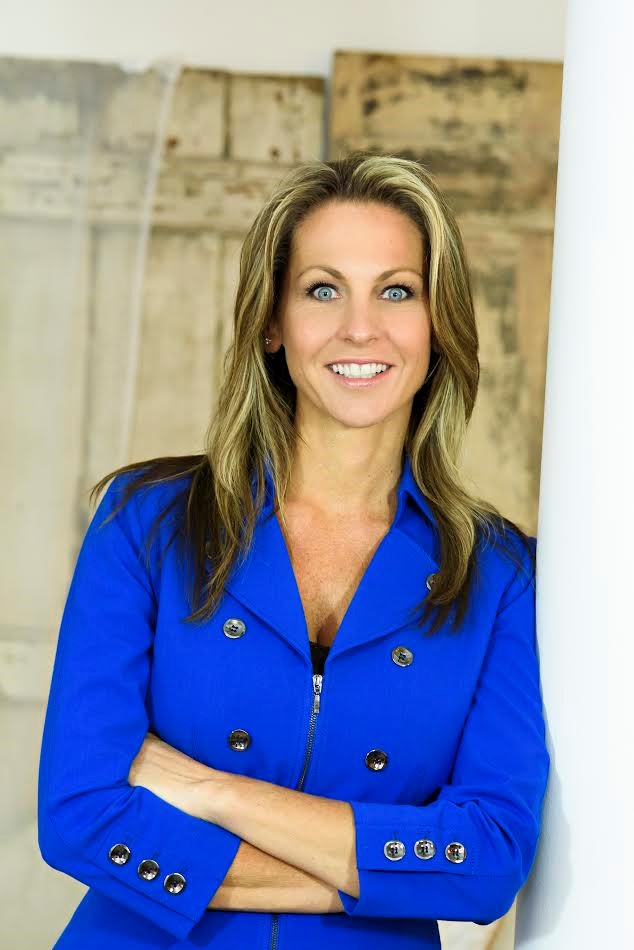
Pictured: Me on set, ready for acting! I played a doctor in the 2020 movie, “Rage Can Kill.”
Q: What is something valuable you’d like others to know?
A: I absolutely love network marketing! I truly wish I had gotten into it when I was younger, but it felt like such a big leap that I wasn’t ready to take at the time. Now that I am in it, I realize that it wasn’t such a big leap at all, in fact, it runs very parallel to the business world that I stepped away from. It’s just that now the earnings and the income go to me instead of the company that I work for!
Q: What does feminism mean to you?
A: To me, feminism is being able to earn the same amount of money as any other person for the job that is being done. I like what I do because the effort I put into it gives me the same rewards out of it. There is no discrimination of any kind.
“Sports have been a passion of mine since I started playing soccer at 4 years old, and I have been coaching for 15 years.”
Q: What are you passionate about?
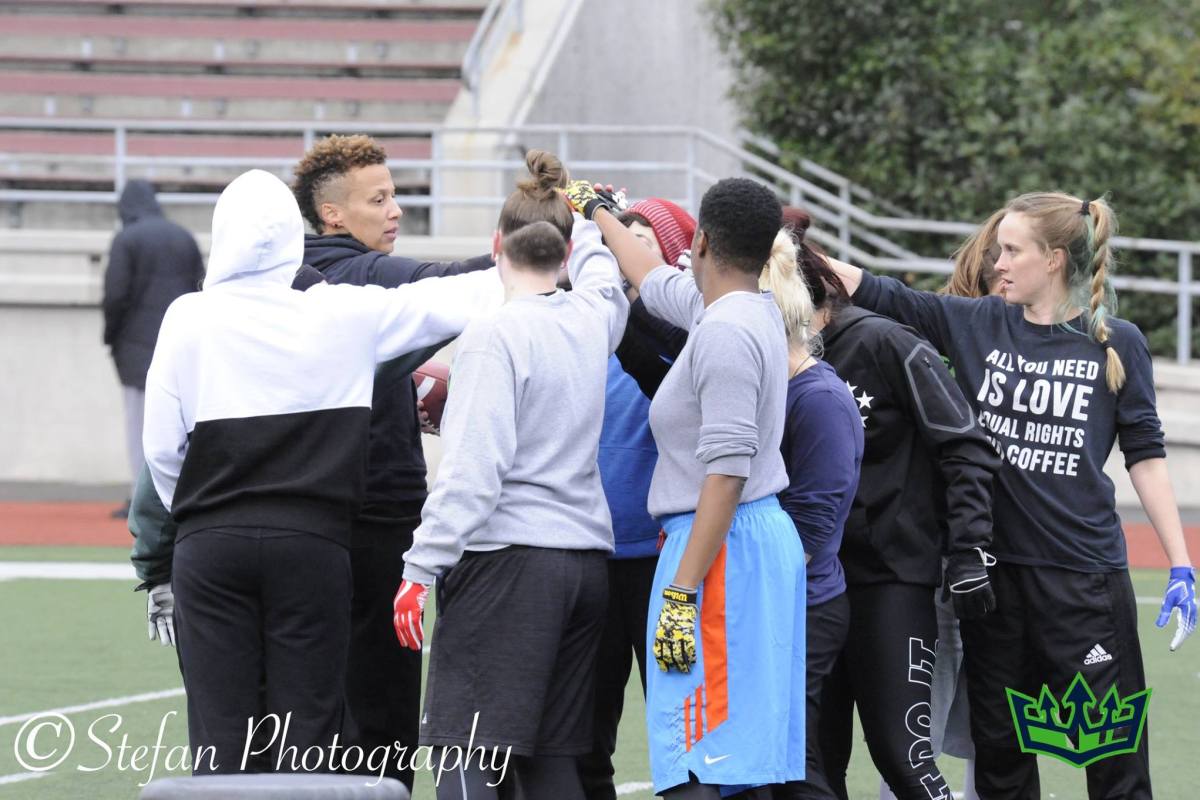
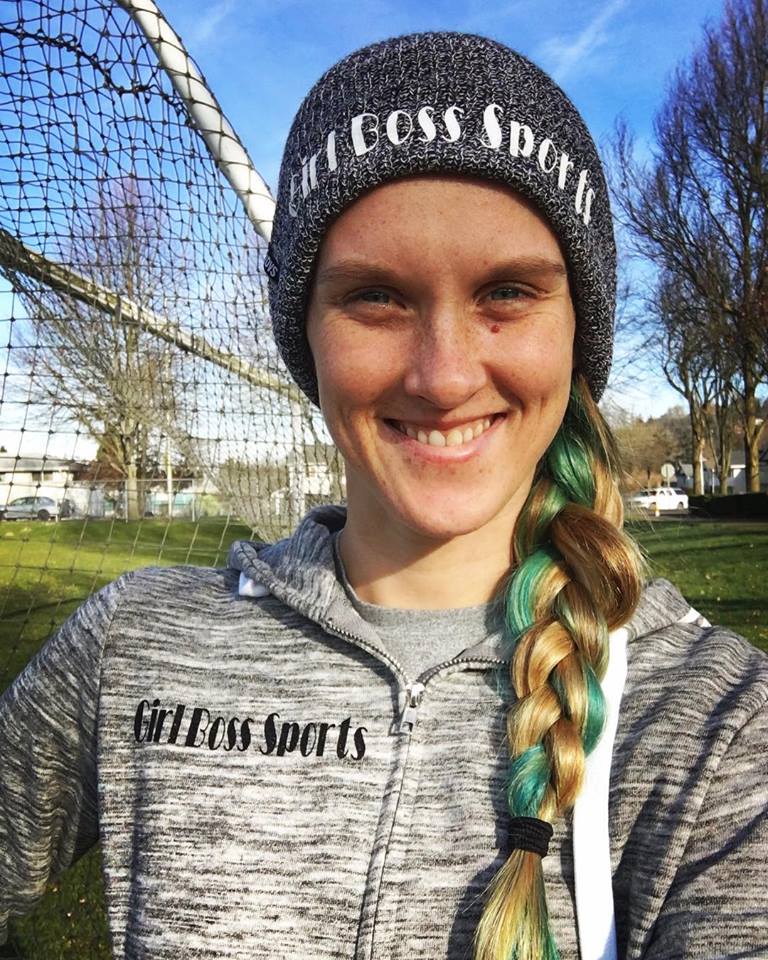
A: As the CEO/ Founder of Girl Boss Sports and a professional tackle football player with the Seattle Majestics this year, you could say that one of my biggest passions is sports.
Girl Boss Sports is a company I created for two main reasons:
1) To improve the pipeline of female sports coaches as there are simply too few of us (for example, only 21% of soccer coaches in the US are women) and
2) To provide a quality sports experience FOR girls BY women (currently we are focusing on soccer in the Seattle area). We work on soccer-specific development, mentality, fitness, AND do all of this with the added benefit of providing female role models to the athletes we coach.
Sports have been a passion of mine since I started playing soccer at 4 years old, and I have been coaching for 15 years.
In addition to being a soccer player, I have now joined the Seattle Majestics football team to try my hand at something new.
As a rookie, I am excited to step outside of my comfort zone, learn to tackle, and hopefully win a championship with the impressive women who make up this team.
I am also passionate about leadership, women supporting women, and being a “womanpreneur.”
Currently, my two big goals are having the best season I can with the Majestics and scaling up Girl Boss Sports as we hire several coaches and are establishing partnerships with other local businesses who have similar goals.
Q: What were your younger years like?
A: Being an athlete my entire life was one of the most impactful things on who I am to this day (and I’m not alone in this). According to a survey of female C-Suite Executives, 96% said that they participated in sports as a teenager, and I am one of those individuals.
Sports ignited my passion for leadership when I first took on the role of “captain” and then eventually “coach.” Sports also taught me life lessons about teamwork, accountability, working toward goals, sportsmanship, confidence, and communication–all these things that have helped me to be successful as a woman in this world and at work.
These lessons I learned along the way are a huge part of who I am today and what Girl Boss Sports is working to do for the next generation of female athletes and coaches.
Q: What is something valuable you’ve learned that you’d like others to know?
A: I have learned that if you want success (in whatever area that is for you), it takes hard work, grit, preparation, and resilience (and one without the other doesn’t work).
Life will hit us hard at one point or another, and the ability to be resilient in the face of adversity is one lesson that sports taught me that is transferable to finding success and happiness in life.
Secondly, I have learned that nothing comes easy that is worthwhile, and this is where hard work and grit comes in. One thing I often find myself speaking about to the athletes I work with is centered around these topics.
Often I have found that athletes can be hard on themselves if every movement, touch, etc. is not perfect every time.
Instead of getting frustrated about not having fully developed a specific skill we are working on, I discuss that it is not perfection we are after, but progress.
The only way to progress at something is to go through the discomfort of imperfection.
Finally, whenever I am working on a “hard thing” (and what that is varies depending on the circumstances), I have found that by preparing for it ahead of time not only does it go better, but I have significantly less anxiety around it as well.
Preparation really is the key to success in life!
Q: What would you like others to learn from your story?
A: One of the things I hope you learn from my story is the power that sports can have on anyone and everyone.
Being involved with sports provides so many opportunities to teach life lessons and find success on AND off the field.
Whether you are someone who has never played before or are thinking about getting back into it, just do it!
There are a ton of recreational leagues and teams and classes around the nation [and around the world] that could be a great outlet for you, and I highly recommend it.
And, if you are someone with children (or know somebody who has children), I’d encourage you to get them involved in (and help them stay in) sports. If you have girls, it’s even better you’re reading this.
By age 14, girls are 1.5 to 2 times more likely to drop out of sports, and this is incredibly sad to hear. This is due to a ton of reasons, including lack of access, costs associated with participation in sports, and lack of positive female role models. These are all things that Girl Boss Sports is working to change.
Q: What does feminism mean to you?
A: Intersectional feminism is where it’s at! This means that I am striving to do my part in advocating for equality, not only among the sexes, but also working to be inclusive of women with other intersectional identities (i.e. women of color, LGBTQ+ women, women with different abilities, and more).
As someone who has experienced how hard society can be on us women, it is so important for us to stand together and advocate for one another in everything we do.
“Don’t be afraid to put your work out there. It’s very daunting at first, but it’s so rewarding when people read your book and tell you how much they love it. What makes us feel good is when we get a message from a reader telling us how she had a pretty hard day and our book made her feel better.”
Q: Who are you?
A: We are Dee J. Stone, a pseudonym for two sisters who write and publish young adult and adult novels on Amazon. We’ve been doing this for over five years. Here is our Amazon author page.
Q: What got you interested in writing?
A: We were always creating stories since we were little kids, although we didn’t know that at the time. As young kids, we would sit with our dolls and play for hours, creating a story and running with it. When we were a little older, around middle school, we would draw comics and create stories that way. But we didn’t actually start writing until high school. We started off writing plays before moving onto novels.
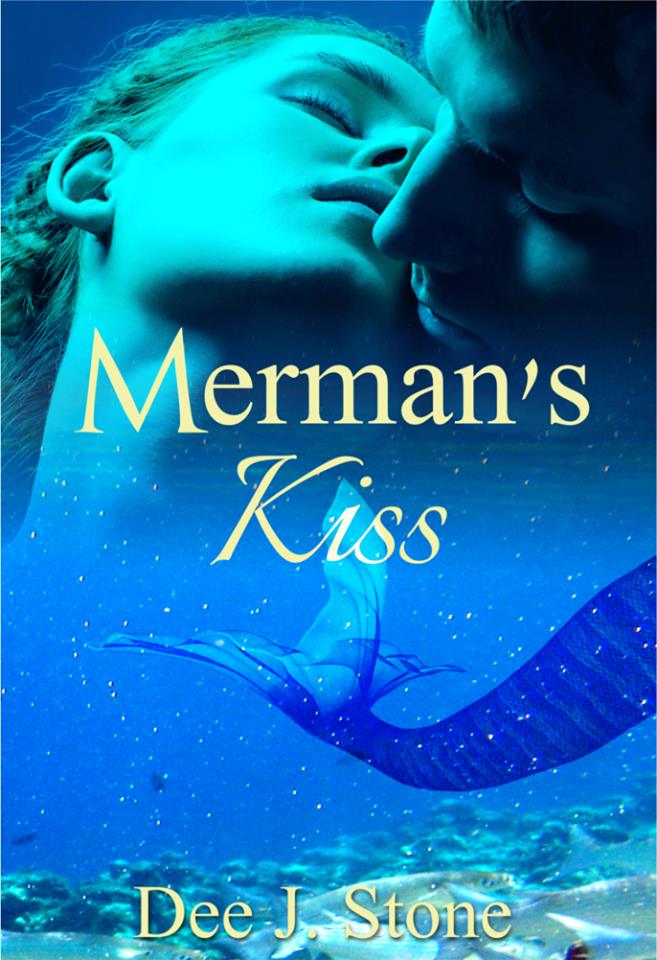
Pictured: Dee J. Stone’s most popular novel,Merman’s Kiss. Available for Kindle or paperback, click here.
Q: Why did you choose self-publishing, and can you explain it?
A: Self-publishing is when you write and publish a book all on your own, without reaching out to an agent and/or publisher. A self-published author has to handle every aspect of the publishing process including providing a good cover that would catch readers’ attention, editing, proofreading, and marketing. Many authors hire other people to take care of the cover and editing, though marketing is usually on their shoulders. The reason we chose the self-publishing route was that we like the freedom to make our own choices when it comes to our books.
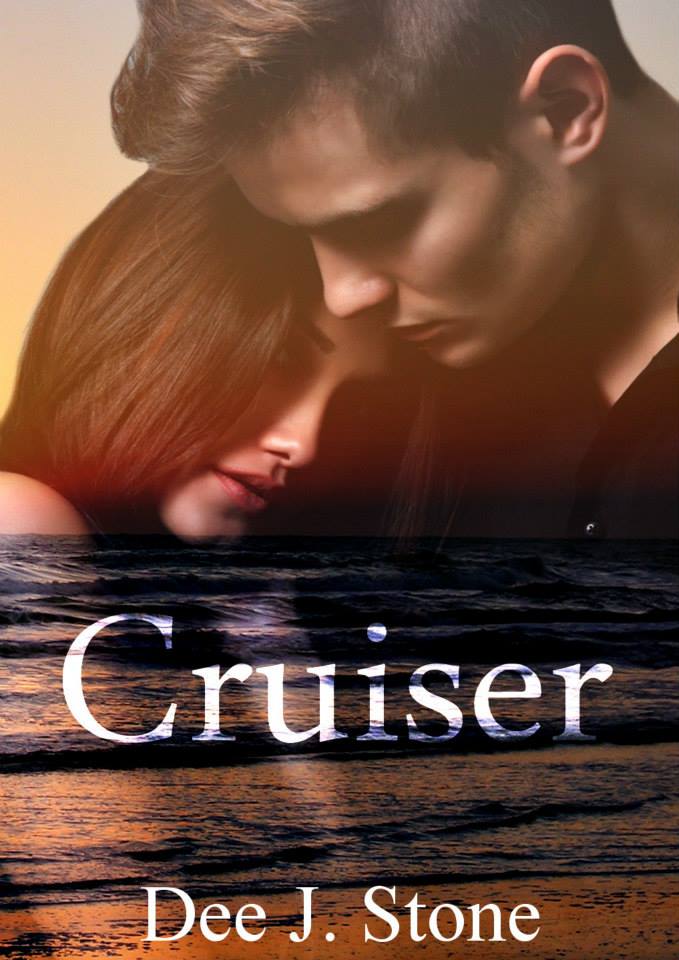
Pictured: Dee J. Stone’s novel, Cruiser. Available for Kindle or paperback, click here.
Q: Can you tell us about some of the books you have published?
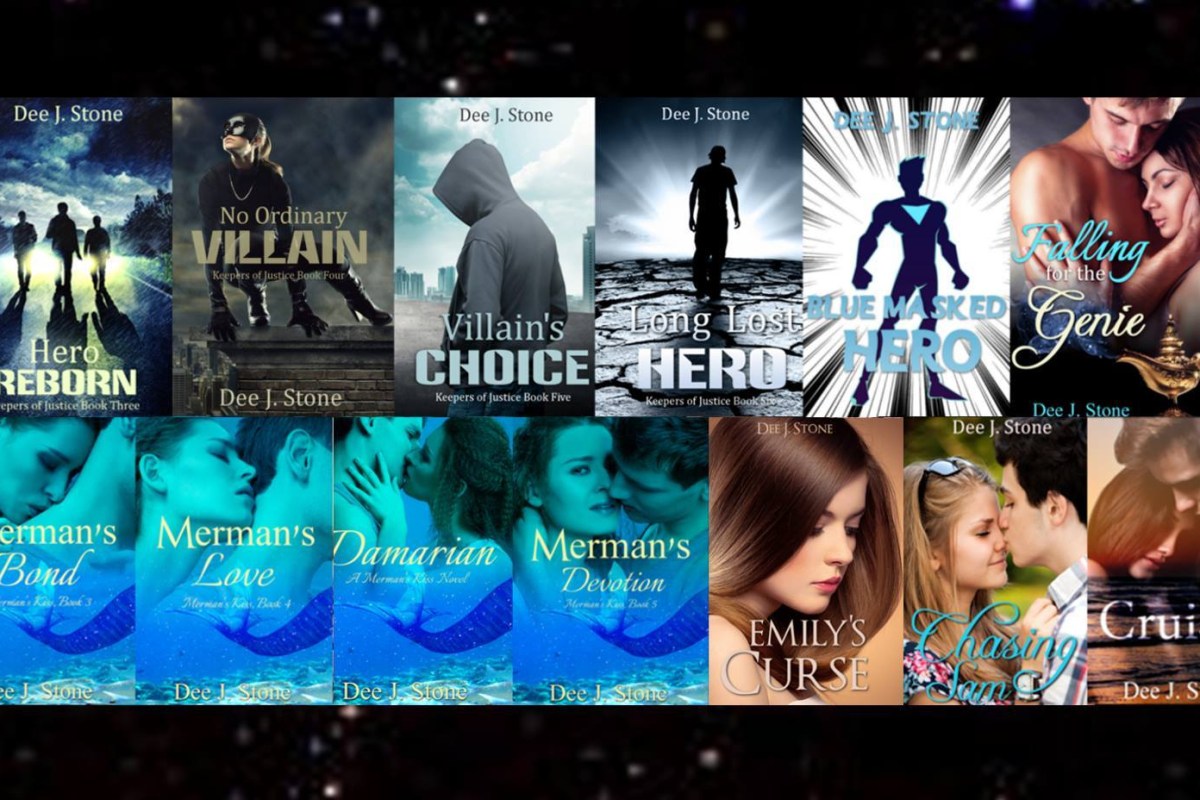
A: Sure! Our most popular books are a part of a paranormal romance series called Merman’s Kiss. Here is the link to the series. It follows the story of Cassie Price, who stumbles across a merman that has washed up on shore. The two of them become close and eventually fall in love.
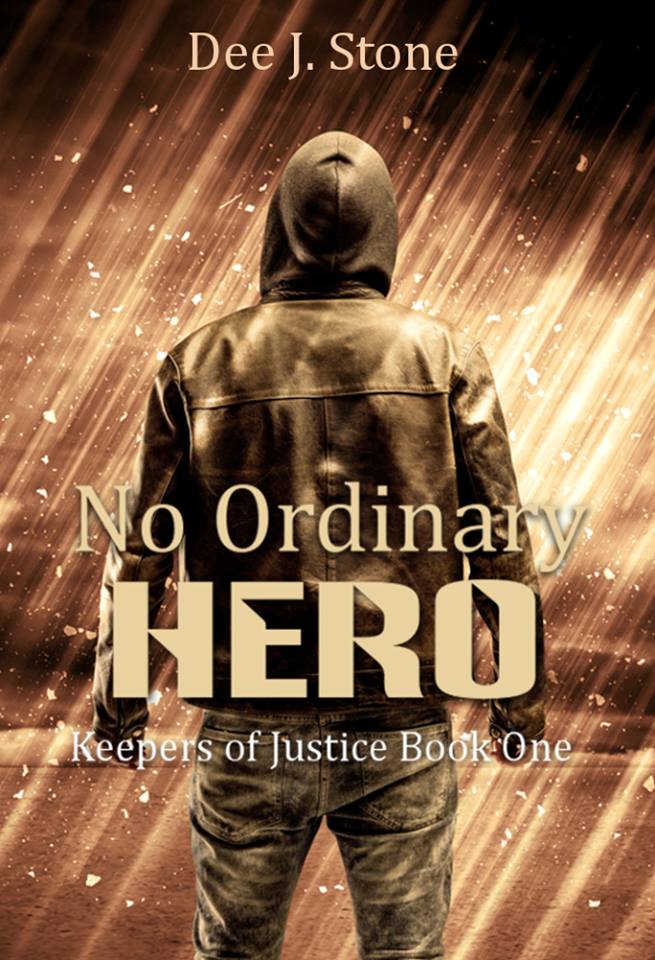
Another series we have is a superhero series called Keepers of Justice. It’s about a school for kids with powers. Here is the link to the series. We also have a fairy-tale retelling series. We write in many genres, such as paranormal, fantasy, contemporary, and romance.
Pictured: Book one of the series, Keepers of Justice. Available for Kindle or paperback, click here.
Q: What advice would you give to aspiring writers?
A: Don’t be afraid to put your work out there. It’s very daunting at first, but it’s so rewarding when people read your book and tell you how much they love it. What makes us feel good is when we get a message from a reader telling us how she had a pretty hard day and our book made her feel better. Another piece of advice would be to make sure you give your book to someone to read before publishing it. Someone who is not a family member or friend and can give you honest feedback. A writer constantly needs to learn from her mistakes. And another piece of advice? Try not to take bad reviews too seriously. Every book gets them, and they hurt really badly, but try to focus on the good reviews and continue writing.
Pictured: Dee J. Stone’s Falling for the Genie, available via Kindle or paperback, click here.
Q: Is there anything valuable you have learned throughout the writing/publishing process?
A: Stay true to who you are and what you believe in. Many writers feel like they need to change themselves in order to fit in and sell more books. If you want to sell, you may need to make some changes to your writing, but you shouldn’t have to compromise your beliefs. Readers will love your story if you write it well and touch their hearts.
Q: What would you like others to learn from your stories?
A: We believe in writing characters who respect one another. When we write romance novels, we try to portray sweet and kind guys/men who treat women with the utmost respect. There are so many books out there that have male characters who don’t treat their women very kindly, and that is not something we believe in. Hopefully, readers will walk away from our stories with a better understanding of how people should treat one another.
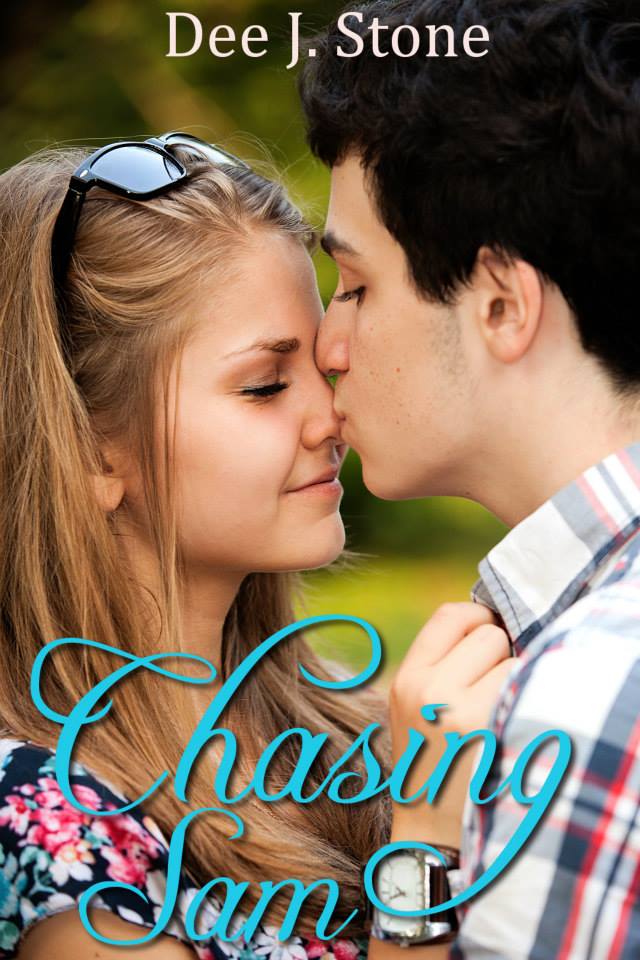
Pictured: Chasing Sam, written by Dee J. Stone, available via Kindle or paperback, click here.
Q: What does feminism mean to you?
A: Expanding on the previous question, we believe that feminism is about people respecting one another. No two people are created the same, and there will always be a difference of opinion or arguments. It’s how a person treats other people that matters. Feminism is not only about women feeling equal to men, but showing men how to treat women, and how women should treat one another as well. As the golden rule goes, “Treat others the way you want to be treated.”
“The most valuable thing I’ve learned in life is to never lose the lesson life teaches.”
Q: What are you passionate about?
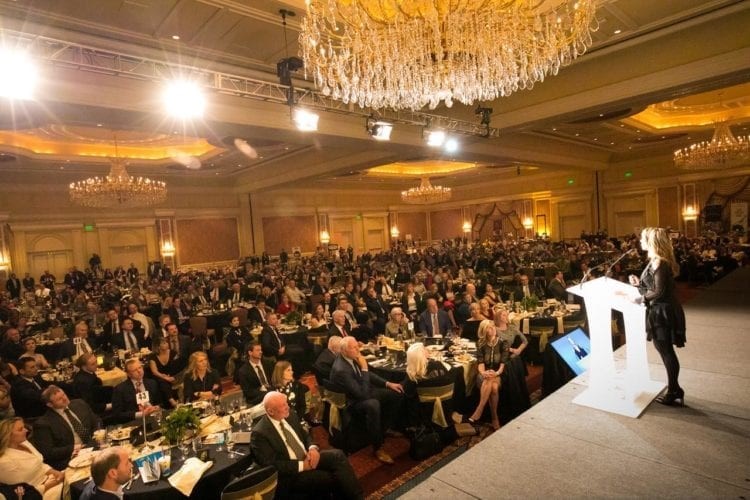
A: I am passionate about living my best life, which includes helping others overcome life challenges, find hope and purpose, and doing all I can to support the Cystic Fibrosis Foundation. Whether I’m speaking to a specific group or at a national conference, my passion and determination is to inspire audiences to step beyond their limitations and guide them to discover the power within and redefine what personal success truly means in this adventure called: LIFE.
The harder question is how I got to this point.
Like most people, I have had some tragically sad challenges. The worst was in 2006, when my daughter Jena lost her battle with cystic fibrosis. It was then that my whole world changed. For a long time following that terrible day, it was hard to call up the strength to take action, to move forward, to take a chance at life. I had been taught to look for and find gratitude in each moment, but when my little girl “moved up” to heaven at the age of thirteen, there was nothing I could see or find other than my grief and pain. I felt I had no choice. But in time, I learned that every day, I get to choose how to live.
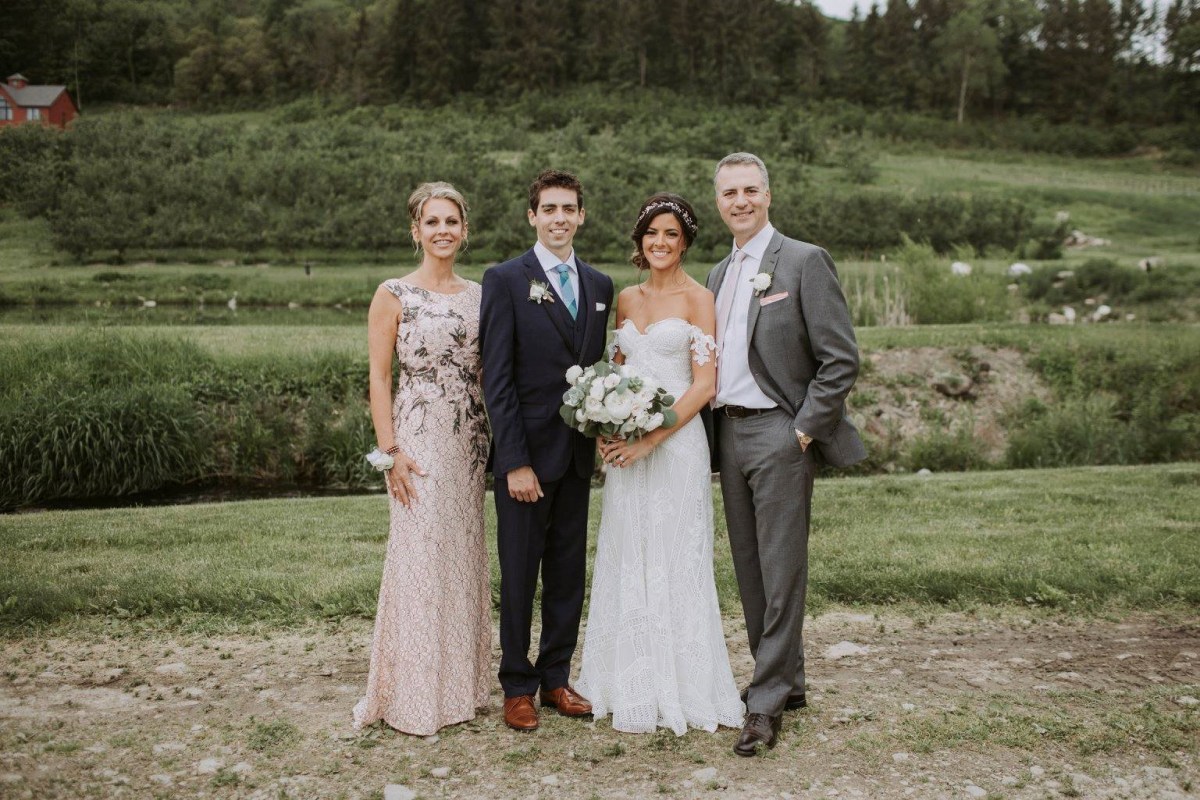
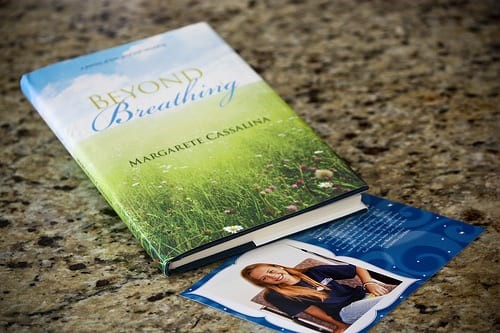
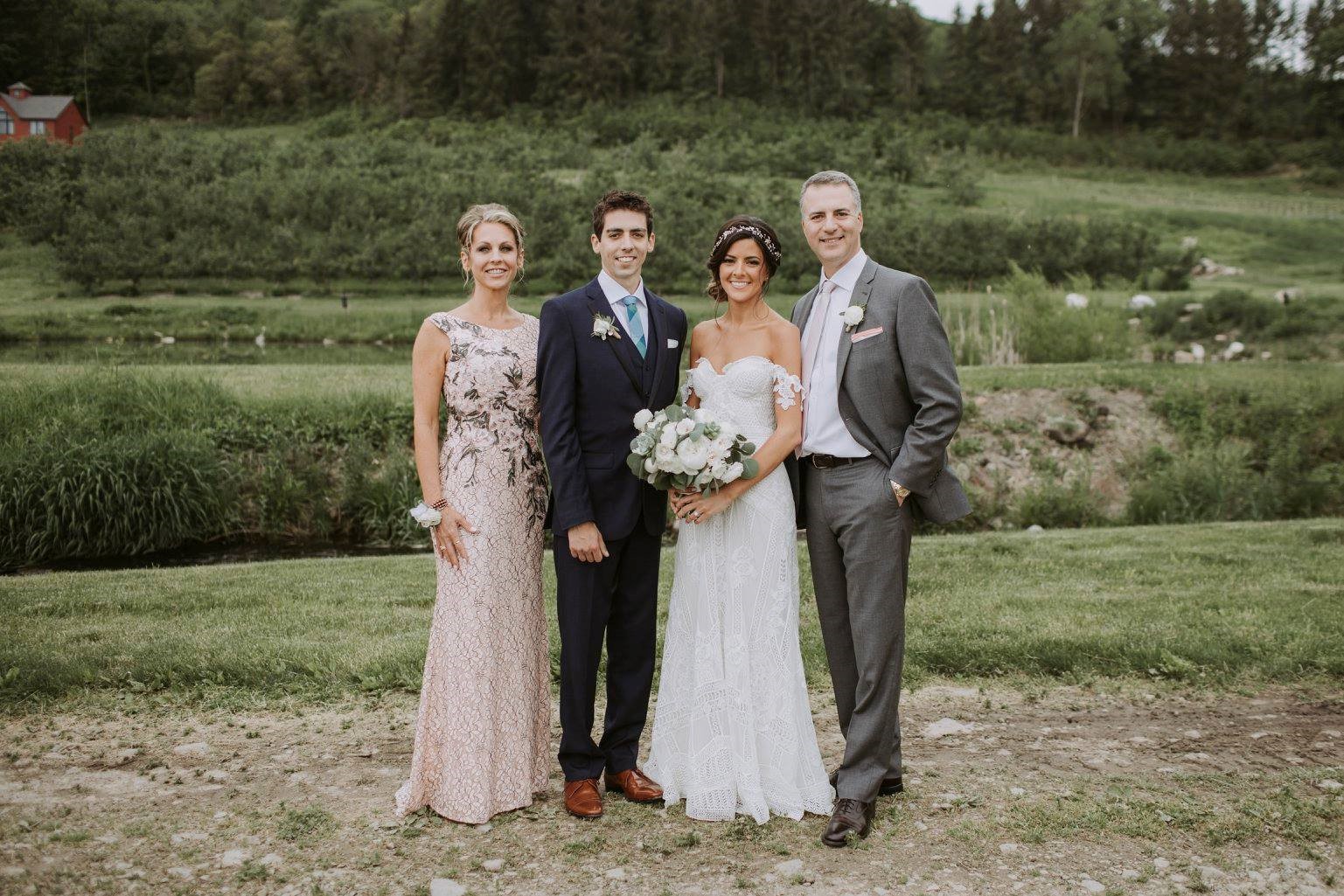
I believe in hope, in embracing the beauty in the broken. Life always presents us gifts, yet sometimes those gifts are brutally disguised as pain and suffering. My daughter once told me that pain is not a valid reason for stopping, so I continued on. I’ve taken many steps to get to a place where I can take charge of my life to become an award-winning author of two books: Beyond Breathing and See You at Sunset, a professional speaker, and a national advocate for The Cystic Fibrosis Foundation. I’ve taken steps to stay happily married for twenty-eight years to my handsome husband Marc, and I’ve been blessed to watch my son marry the love of his life, which was the best day of mine.
Crisis, fear, and the anxiety of crumbling under life’s challenges have crossed my path so many times, I’ve learned that if I could change my attitude, my health, and my mental well-being, my life would ultimately change as well. Each challenge I faced in life taught me something more about myself and the world around me. Every decision I made, whether I was presented with a multitude of options, or no choices at all, changed who I am today.
Here’s the thing, somewhere deep in my soul, every journey and every obstacle I faced helped bring me to a place where I can feel calm among the chaos. Every day, I give thanks for a grateful soul, a mind that’s confident, and an open heart that’s compassionate.
That’s what I’m passionate about and want to share that with as many people who want to hear it.
Q: What were your younger years like?
A: My childhood was like most everyone else, complicated with drama, trauma, and not easily summed up as good or bad. I was a chubby middle child, diagnosed with dyslexia in 2nd grade, and my parents divorced while I was in the 8th grade. I lived in Germany with my great aunt when I was fourteen for a ‘cultural experience.’ I graduated from high school a year early and that same year, at age 16, I permanently moved out of my childhood house after an argument with my mother. I was pregnant before I got married and had two children before I was twenty-five. Both my children were born with a fatal genetic disease, cystic fibrosis, which currently has no cure. I’ve dealt with abandonment issues, weight issues, depression, and anxiety. All of which made me who I am today.
All our lives, all our stories, make us who we are, it’s up to us how we decide that value.
Q: What would you like others to learn from your story?
The most valuable thing I’ve learned in life is to never lose the lesson life teaches.
For all of my life, I’ve had a love of learning, and I’m pretty sure that’s why God, with his or her infinite wisdom and sense of humor, decided to fill the first half of my life with one crisis after another. Through all the trials and many errors, I’ve come to see that life’s challenges, including reaching midlife, doesn’t have to be a crisis.
Wouldn’t you agree that sometimes life can come at you fast and a sucker punch can land without any warning? I’ve been there. I get it. In a split second, you’re in the middle of life-changing choices, insurmountable obstacles, and heartbreaking hardships. It’s what you do with the lesson just presented to you that can change the path you’re on. Chances are, someone has been down that path before and can help guide you out, if you let them.
If by me sharing my painful and crazy life journey can reach out and touch your heart in even the smallest way possible, and help you deal with and let go of the crises and pain in your life, then I’ll feel my words and stories have a purpose beyond what they already hold for me.
My advice to you is to share your story, it could make all the difference in someone else’s life.
Q: What does feminism mean to you?
A: Feminism, to me, is an emotionally charged word, placing a person as ‘a feminist’ if they are for feminism or they are ‘a non-feminist’ against feminism. To me, this is divisive, and I’m not about labels, division, or exclusion as much as I am for united, equal, and collective for the common good of all civilization.
It’s was such a powerful and resurfaced word that Feminism was Merriam-Webster’s Word of the Year for 2017.
Feminism, by definition, is equality of both sexes, but its common understanding is the passionate responsibility of the equality of women in the workforce, home, and political front. Its wave of enthusiastic ideology and emotion can cause more opposition than necessary.
For me, I’d instead focus on the constructive influence of women helping women. The underlying power that comes from a place of growth, humanity, and the ability to rise together while helping one another achieve each individual’s best possible life. The alliance of women reaching back and helping those who are struggling is where the real strength lies. Women being brave in adversity, sharing their story to help others, and using their voice against injustice is what I support. We, as women, can do so much to change the landscape of our future when we rise up, lean in, and stand tall without having to put down, degrade, or alienate any opposition that confronts the process of growth.
“One thing I’ve learned is this: You cannot control what happens in your life, but you can control how you react to it. I think if I continued to sulk and think negatively, nothing significantly positive would’ve happened in my life. Changing my perspective and immersing myself in hope and positive thinking only resulted in positive changes in my life.”
Q: What are you passionate about?
A: It would be exceptionally hard to pinpoint one thing I am passionate about because I am passionate about everything I do. I currently work as a communications coordinator for a company that promotes financial stability in underdeveloped countries.
Luckily, I found this position by accident, and I am proud to say that I am a part of a project that helps those in need in someway somehow. One of my passions is definitely helping others.
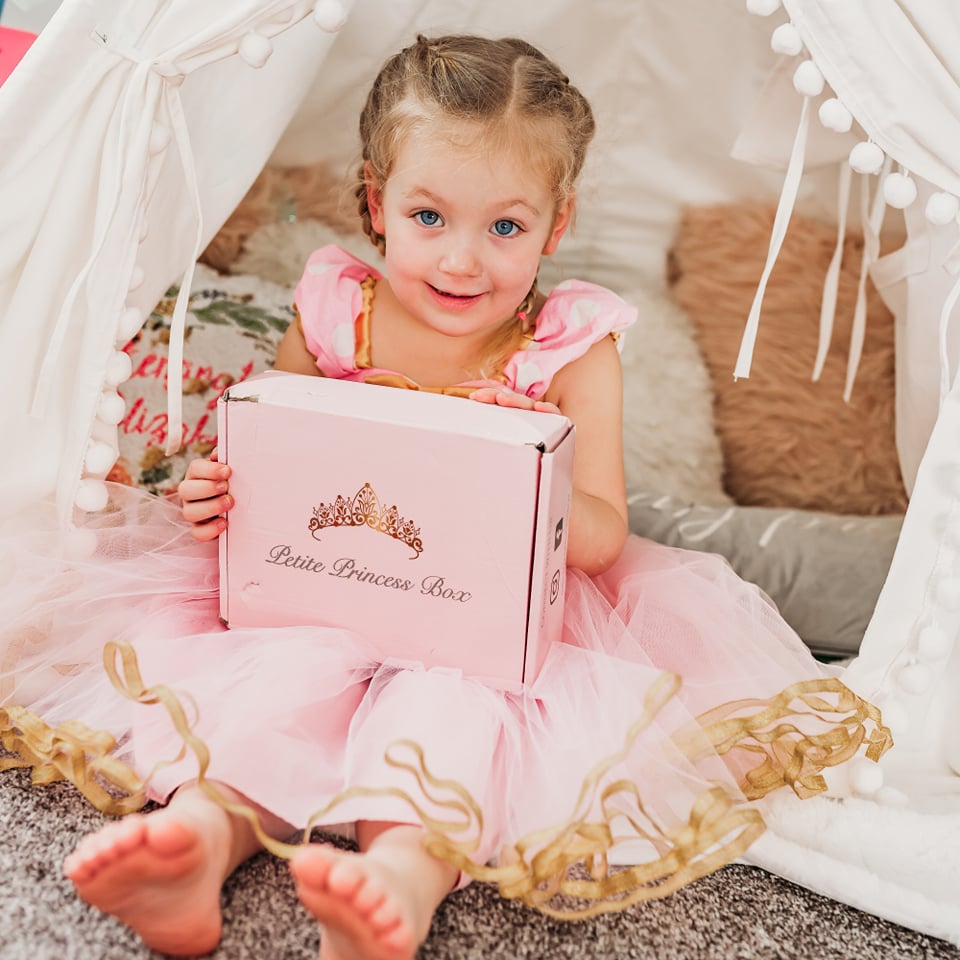
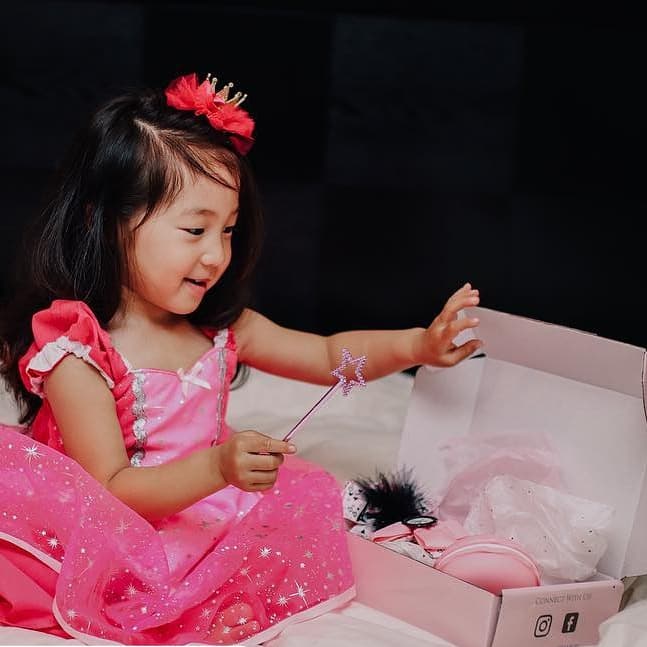
Aside from my full-time job, I am the founder of the subscription box business “Petite Princess Box,” and I have to say building, creating, and executing my own ideas and seeing it all come to life is one thing I will always be passionate about. I think I have always been an entrepreneur at heart.
Pictured: One of Kelly’s customers enjoying her Petite Princess Box!
Q: What is something valuable you’ve learned that you’d like others to know?
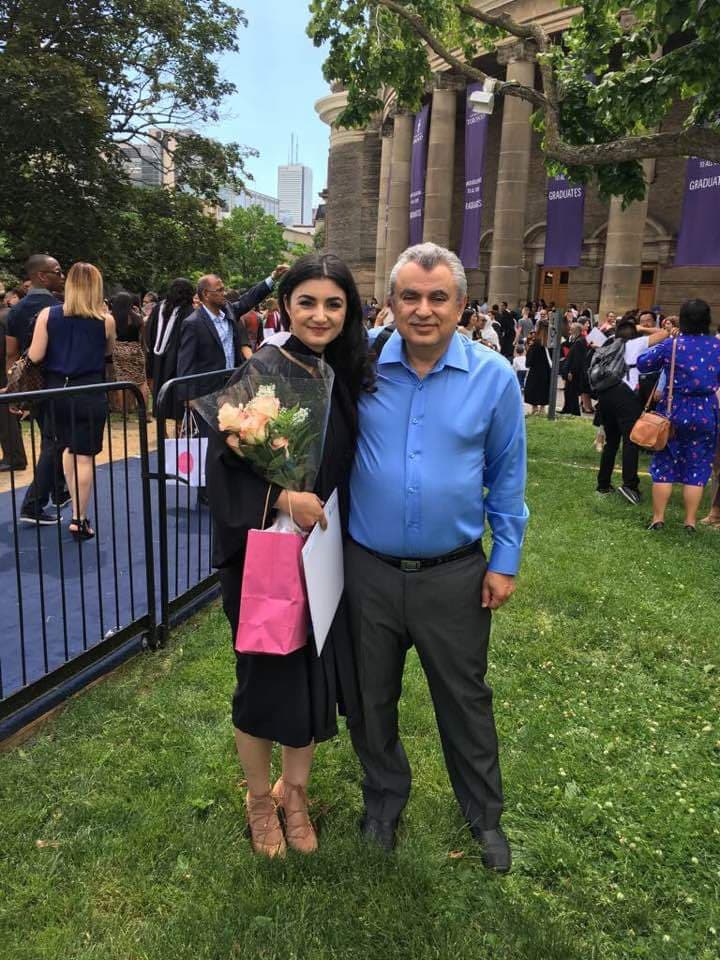
A: A year ago, I lost my dad suddenly from a heart attack. I had such a stable life and everything was going great for me. I just got into my master’s program, had a growing business, and my family was happy and healthy, and then my world just changed dramatically with his death.
You can say I had to grow up quick. I had my hands fully immersed in everything after his death. I guess you can say I became the “new man” in the house. After his death, I lost a lot of motivation. He passed away two weeks before my master’s program would begin, and I could barely focus.
I felt like the quality in my work was slowly diminishing. I also stopped focusing on my subscription box business, and I could see it literally sinking. I ended up picking myself up and telling myself that I have to really immerse myself in positive thinking and to focus on finishing the goals my father wanted me to complete. And so I did that, and a year later, my whole life has changed (for the better).
I graduated with my degree, found a close and loyal tribe of friends and loved ones, got my very first “big girl” job, and rebranded my entire subscription box business, and it is growing very quickly.
One thing I’ve learned is this: You cannot control what happens in your life, but you can control how you react to it. I think if I continued to sulk and think negatively, nothing significantly positive would’ve happened in my life. Changing my perspective and immersing myself in hope and positive thinking only resulted in positive changes in my life.
Q: What were your younger years like?
A: My childhood was nothing but great! We lived a pretty modest life in the suburbs. I grew up with my parents who immigrated from Palestine and my younger sister. My parents have always been supportive and always pushed us to be our best.
Growing up, I struggled in school—all the way up to my high school years. I was never able to maintain exceptionally good grades and as many tutors as I had to assist me in my studies, there was still this struggle I had in obtaining a single “A” on my report card. Before starting my last year of high school, I told my guidance counselor that I wanted to get into university after I graduate. She told me that based on my grades from my previous years, attending a university would not be a realistic goal unless I managed to maintain an 80% average in my final year.
I remember going home to tell my parents how angry I was at the lack of encouragement my guidance counselor had for me, and I promised myself and my parents that I would work hard enough to get accepted into a university program. In my last year of high school, I ended up maintaining an 87% average and got accepted into the highest ranked university in Canada.
Fast forward to my last year of university—I had maintained a substantial GPA and ended up getting accepted into a very competitive program for a master’s degree in communications. You can say that these experiences in school really impacted my life to where I am today. If you were to ask me if I’m still upset that my guidance counsellor for discouraging me, I would say no. If she didn’t discourage me, I wouldn’t have pushed myself as hard as I did to prove her wrong and prove myself right.